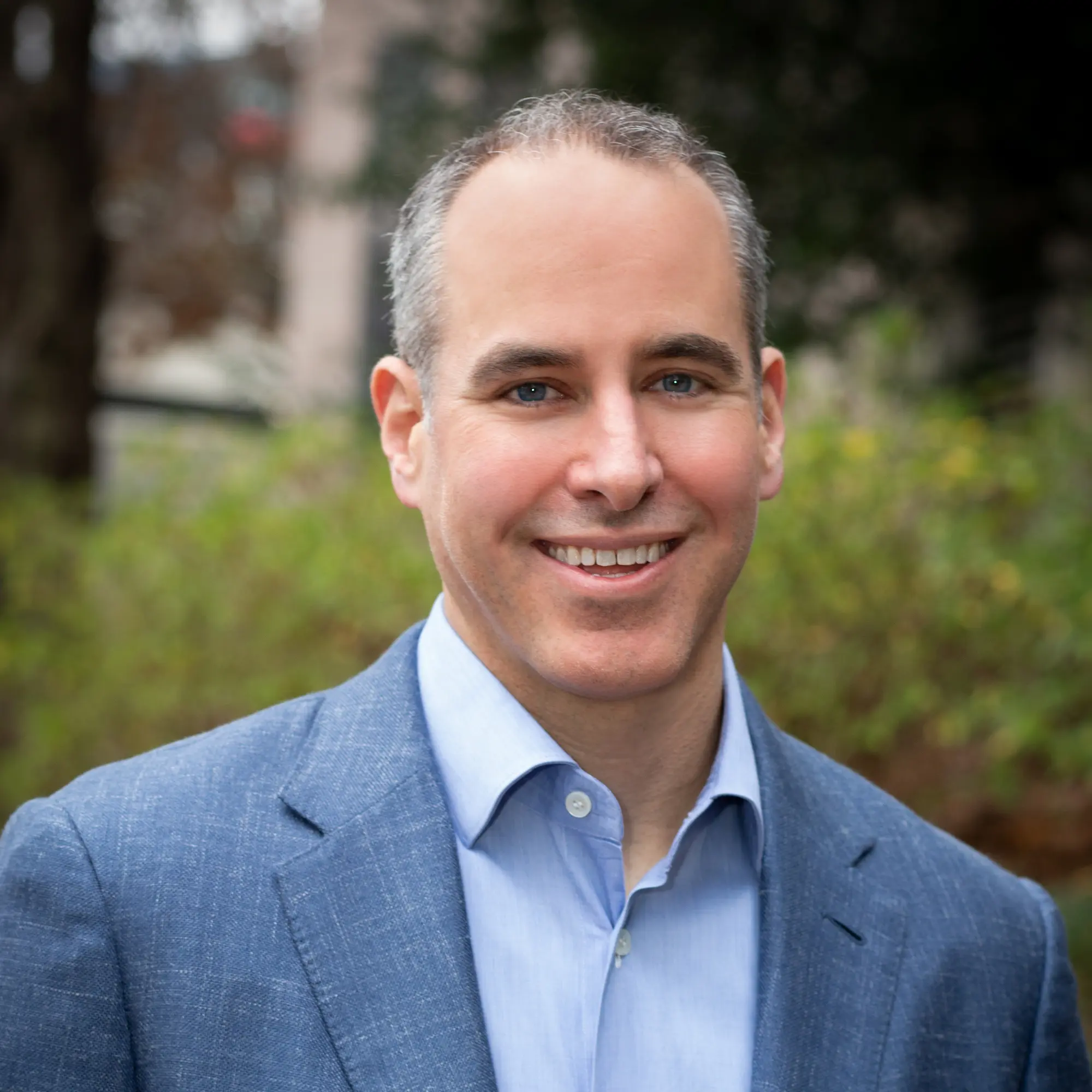


Schwab Network: CRE's 'Slow' Rebound and Recovery Winners & Losers
Greg Friedman was featured on Schwab Network discussing CRE's slow recovery, liquidity returning to housing, multifamily as a winner, and mid-term hotels facing near-term headwinds.


Higher interest rates are making commercial real estate refinancing more difficult by increasing debt costs and reducing borrowing capacity. For investors, these financing gaps are creating opportunities in private credit, loan acquisitions and recapitalizations, even when the underlying properties remain financially sound properies.
On Peachtree Point of View, Greg Friedman, Managing Principal & CEO of Peachtree Group, discussed these pressures and emerging investment opportunities with Michael Ritz, EVP, Investments, and Daniel Siegel, President and Principal, CRE.
According to Mortgage Bankers Association figures cited in the episode, approximately $875 billion in commercial and multifamily mortgages are scheduled to mature in 2026, with another $652 billion in 2027.
Many commercial real estate loans were originated when borrowing costs were significantly lower. Refinancing those loans today often requires borrowers to contribute additional equity, accept smaller loan proceeds or seek alternative financing solutions.
Siegel explains that borrowers who have already extended their loans now face difficult decisions about which properties warrant additional investment. Yet the underlying assets may continue to perform well. As Siegel observes, "the actual patronage or utility of these assets themselves isn't really the problem here."
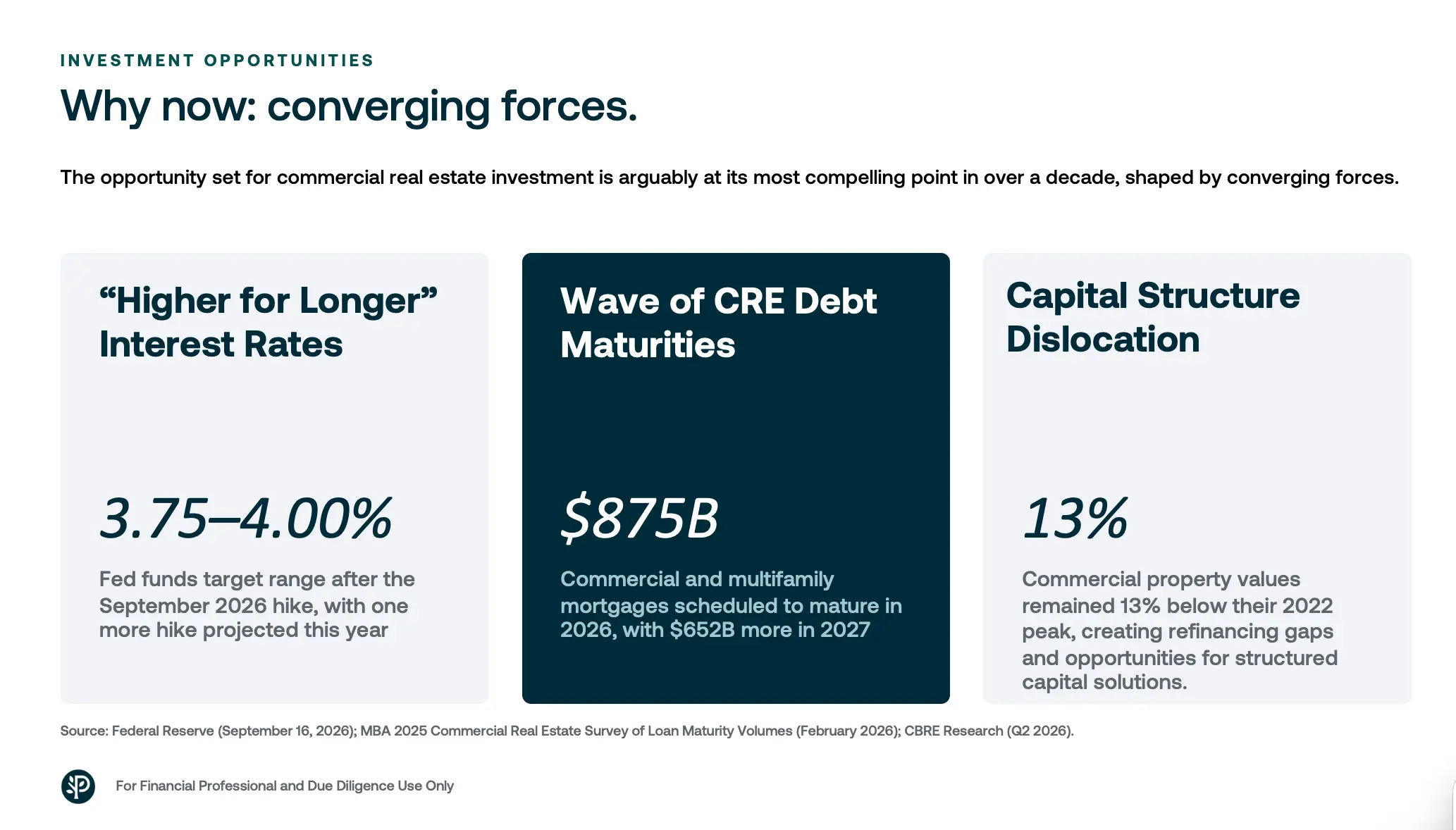
Higher financing costs are forcing borrowers to contribute additional equity, restructure existing debt or seek alternative sources of capital. For investors, these challenges are creating opportunities to provide financing where traditional lenders are unable or unwilling to participate.
Private credit investors may benefit from more attractive pricing, stronger lender protections and favorable positions in the capital structure. Loan acquisitions and recapitalizations also present opportunities to invest in fundamentally sound properties facing financial rather than operational challenges.
The key is distinguishing capital structure dislocation from underlying asset weakness and identifying opportunities where disciplined underwriting and flexible financing can generate attractive risk-adjusted returns.
Lenders commonly assess two measures:
- Loan-to-value ratio (LTV): Debt divided by property value. A decline in value increases the ratio if debt remains unchanged.
- Debt-service coverage ratio (DSCR): Net operating income divided by debt payments. Higher interest expense can weaken coverage.
A property can therefore remain occupied and cash-flowing yet be unable to refinance its existing debt on comparable terms.
Ritz emphasizes the need to separate property fundamentals from financing conditions. The source of stress matters when assessing risk.
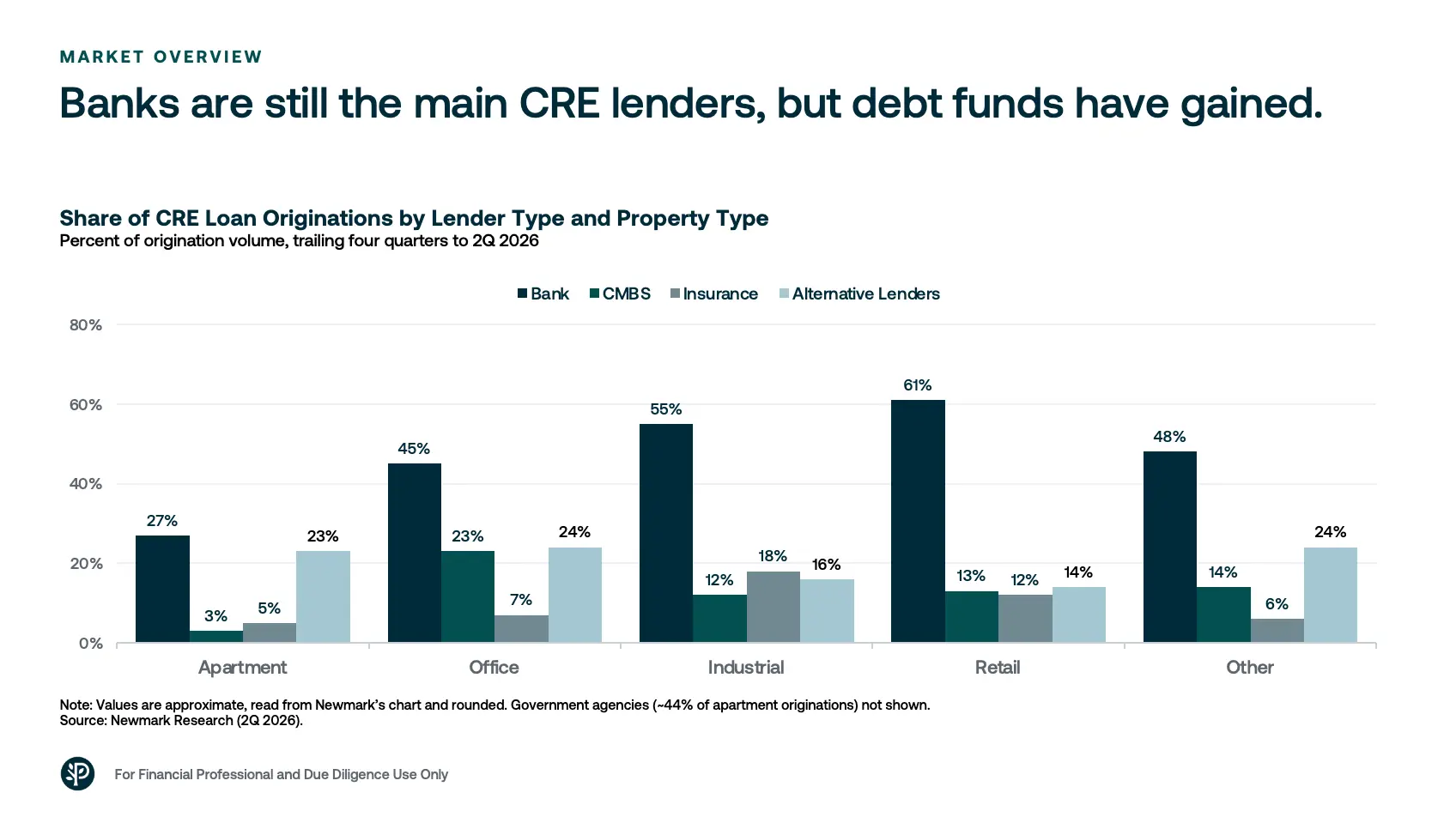
Banks remain important lenders, but their participation varies by property type.
Newmark data presented in the episode shows banks accounting for approximately 61% of retail, 55% of industrial and 45% of office originations within the chart's categories for the trailing four quarters through Q2 2026.
That variation matters because financing availability depends on the asset, borrower and lender's risk appetite.
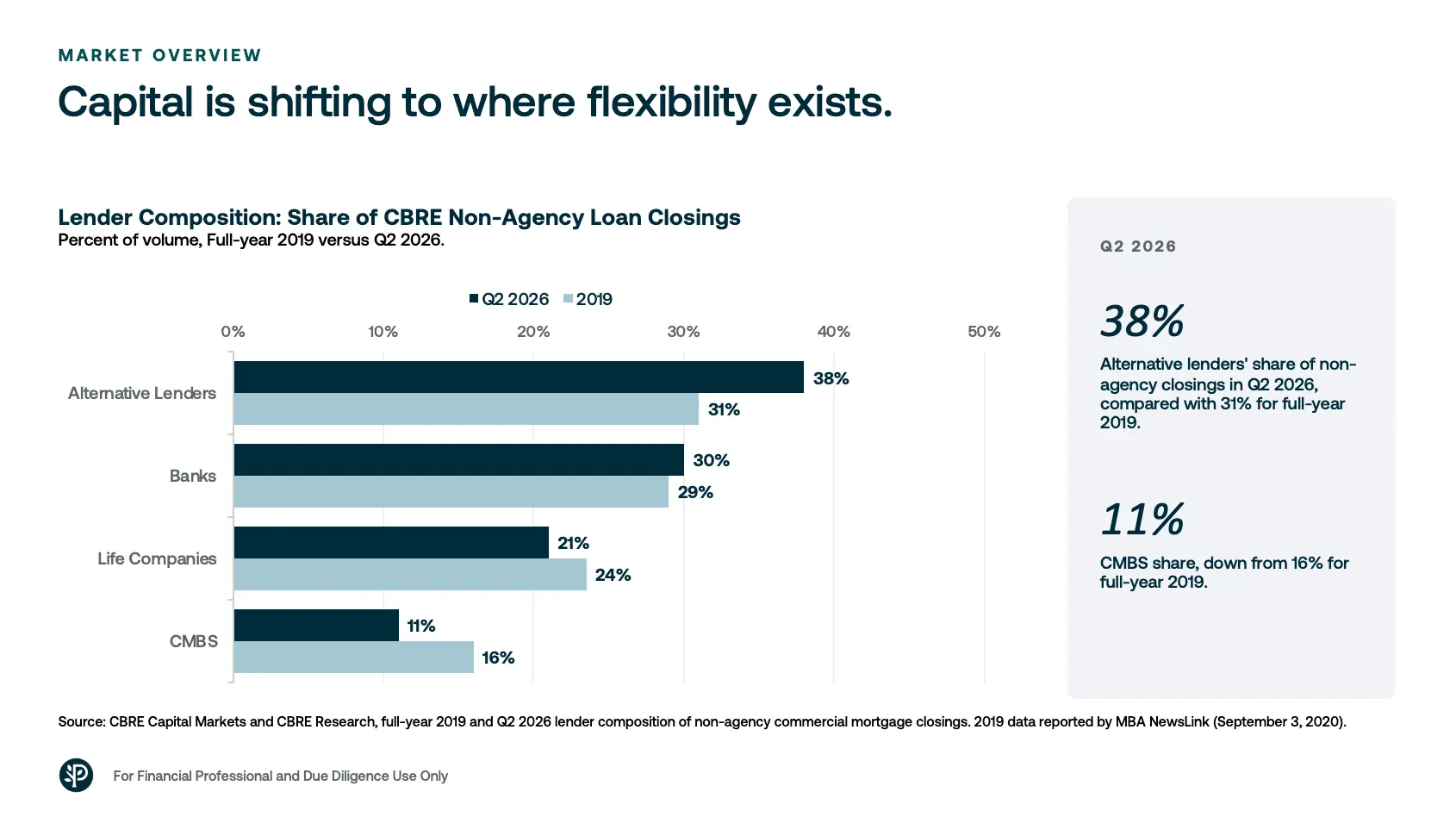
As banks face tighter regulatory requirements, balance sheet constraints and greater scrutiny of commercial real estate exposure, private credit providers are playing an increasingly important role in financing transactions. These non-bank lenders can offer flexible capital solutions, including bridge loans, refinancings, loan acquisitions and structured financing.
The shift is reflected in lending activity. According to CBRE data presented by Peachtree, alternative lenders accounted for 38% of non-agency commercial mortgage closings in the second quarter of 2026, compared with 31% for full-year 2019.
For borrowers, this expanding pool of alternative capital provides additional financing options when traditional lenders are constrained. For investors, it creates opportunities to deploy capital into transactions where financing demand remains strong but conventional lending capacity is limited.
Friedman sees opportunities in bridge financing, loan acquisitions, preferred equity and recapitalizations as borrowers navigate capital structure challenges and more restrictive lending conditions. However, realizing attractive risk-adjusted returns requires disciplined underwriting, with particular attention to collateral quality, borrower strength, financing structure and execution risk.
1. Maturing loans are creating refinancing pressure even for viable properties.
2. Capital availability differs by property type and lender.
3. Private credit can help address financing gaps, but careful underwriting remains essential.
It is the difference between the amount needed to repay an existing loan and the proceeds available from a new one.
Higher interest costs and lower valuations may reduce its borrowing capacity despite stable occupancy or income.
Capital requirements, portfolio limits or other institutional constraints can motivate sales independent of the collateral's condition.
No. Private credit offers alternative financing structures, but repayment, collateral and execution risks remain.