Delaware Statutory Trust (DST) Investments

Exchange real estate
Keep your capital working

Complete a 1031 exchange while transitioning from direct property ownership to passive ownership of institutional-quality commercial real estate.
Line drawing graphic

$457 million

in DST transactions

Data as of
June 30, 2026

13

DST transactions

Data as of
June 30, 2026
Top 10
among active 1031 exchange sponsors*
*Based on year-to-date 2026 capital raise activity reported by Mountain Dell Consulting.

What Is a Delaware Statutory Trust?

A Delaware Statutory Trust, or DST, allows multiple investors to own fractional interests in institutional-quality real estate.

For qualifying investors, a properly structured DST can serve as replacement property in a 1031 exchange—providing a way to defer eligible taxes while transitioning from direct property management to passive real estate ownership.

DSTs and 1031 Exchanges

A DST can provide a passive, pre-identified replacement-property solution within a 1031 exchange.

01

Sell

Sell qualifying investment real estate and place eligible proceeds with a qualified intermediary.
02

Exchange

Identify qualifying replacement property within 45 days.
03

Invest

Acquire an interest in a pre-identified DST property.
04

Defer

Complete the exchange within 180 days and continue deferring eligible capital gains and depreciation recapture.
Planning a sale? Start before you close.

A 1031 exchange must be properly structured before the relinquished property is sold. Once a sale closes without the appropriate exchange structure in place, it may be too late to qualify for deferral.

Talk With Our Team →

Benefits of DST Investing

DST investments offer a range of advantages for investors looking to defer taxes while transitioning to a more passive real estate ownership structure.

Tax Deferral

Defer eligible capital gains and depreciation recapture through a qualifying 1031 exchange.

Passive Ownership

Remain invested in real estate without the day-to-day responsibilities of property management.

1031 Exchange Execution

Access pre-identified replacement properties that may help investors navigate the strict identification and closing timelines of a 1031 exchange.

Institutional-Quality Real Estate

Access larger commercial properties through fractional ownership.

Diversification

Allocate exchange proceeds across multiple DSTs, property types or markets.

Peachtree DST Program

Ready to explore a DST?

See current offerings or talk through your 1031 timeline with our team.

Peachtree Group

Is a DST Right for Your 1031 Exchange?

A DST may be worth considering if you want to:

Exit the responsibilities of active property management
Complete a 1031 exchange
Maintain exposure to commercial real estate
Access institutional-quality assets
Diversify across properties, markets or asset types
Transition toward passive real estate ownership

DSTs are long-term, illiquid investments and aren't appropriate for every investor. Investment objectives, liquidity needs, risk tolerance and individual tax circumstances should all be considered.

Investment First.
Tax Strategy Second.

Tax deferral is valuable. The underlying real estate still matters.

Start with the asset, market, income potential and risk—then consider how a DST and 1031 exchange may improve the after-tax outcome.

Line drawing graphic

A Growing Institutional DST Platform

Peachtree launched its DST platform in 2022 to give accredited investors access to institutional-quality commercial real estate through 1031 exchange-eligible investments.

The platform draws on Peachtree Group's broader capabilities across real estate investing, lending, development, asset management and operations to evaluate opportunities beyond their tax structure.

Each DST investment begins with the real estate itself: asset quality, market fundamentals, basis, income potential and long-term investment objectives. That same integrated platform actively oversees the asset throughout the investment lifecycle, from acquisition through eventual disposition.

Representative DST Investments

Peachtree's DST platform spans select commercial real estate sectors and markets where the firm can bring relevant investment and operating experience.
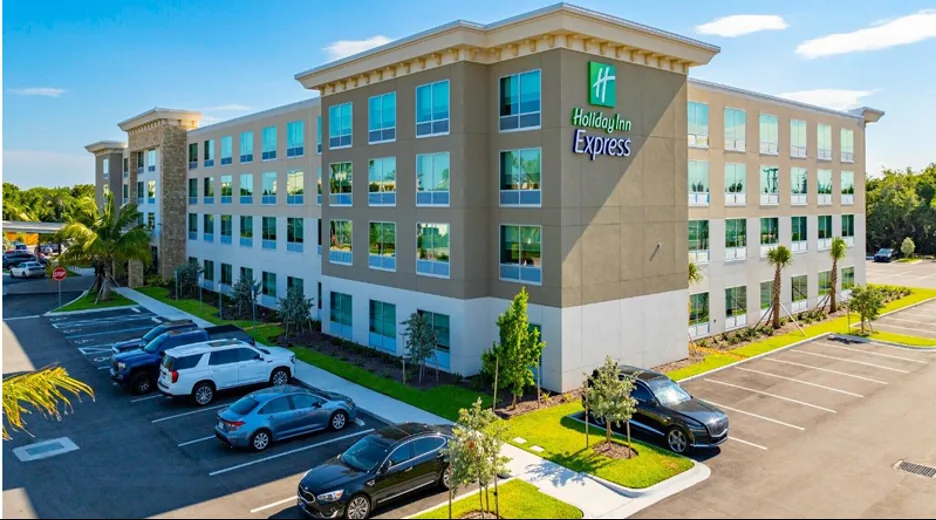
Holiday Inn Express hotel exterior across from Port Canaveral in Cape Canaveral, Florida

PG Cape Canaveral DST

Hospitality | Cape Canaveral, Florida
A 150-room Holiday Inn Express located across from Port Canaveral, with demand supported by the cruise industry, Kennedy Space Center, Cape Canaveral Space Force Station and Florida's Space Coast.
Hasbro distribution facility exterior in Midway, Georgia

PG Savannah Industrial DST

Industrial | Midway, Georgia
A newly constructed, approximately 600,000-square-foot distribution facility located in the Savannah logistics corridor, leased to Hasbro under a long-term net lease with annual rent escalations. The property serves as a key hub in Hasbro's U.S. distribution network, supporting approximately 25% of its domestic distribution footprint.
SpringHill Suites by Marriott hotel exterior in Avondale, Arizona

PG Avondale DST

Hospitality | Avondale, Arizona
A 128-suite SpringHill Suites by Marriott located in the growing Phoenix metropolitan area. Opened in August 2024, the extended-stay hotel is positioned to benefit from population growth, expanding business activity and increasing travel demand in Phoenix's West Valley.

The Experience Behind the Platform

Peachtree's DST platform combines specialized 1031 exchange experience with the investment, asset management and operating capabilities of the broader Peachtree Group platform.

Frequently Asked Questions

Is a DST the same as a 1031 exchange?

No. A 1031 exchange is a tax-deferral strategy that allows qualifying investment real estate to be exchanged for other qualifying real estate. A DST is one type of replacement property that may be used to complete a 1031 exchange.

Does "like-kind" mean I have to buy the same type of property?

No. For purposes of a real estate 1031 exchange, "like-kind" is broadly defined. An investor selling one type of qualifying investment real estate may generally exchange into a different type of qualifying investment real estate, subject to applicable requirements.

When should I start planning a 1031 exchange?

Before you sell your existing property. A qualifying 1031 exchange must be properly structured before the sale closes. Investors considering an exchange should involve their qualified intermediary and appropriate tax and legal advisors before completing the sale.

What are the 1031 exchange deadlines?

Generally, investors have 45 days after selling the relinquished property to identify potential replacement property and 180 days to complete the exchange, subject to applicable tax-return deadlines and other requirements. DSTs can provide access to pre-identified replacement properties, which may help investors navigate these time-sensitive requirements.

What taxes can a 1031 exchange defer?

A qualifying 1031 exchange may defer federal capital gains taxes and depreciation recapture associated with the sale of investment real estate. State tax treatment varies. Tax is generally deferred rather than eliminated unless another provision of tax law ultimately applies.

Can I invest in more than one DST?

Potentially. Investors may be able to allocate exchange proceeds among multiple qualifying DST investments, providing diversification across properties, markets or property types while satisfying applicable 1031 requirements.

Can a DST be part of a long-term estate strategy?

Potentially. Investors may continue completing qualifying 1031 exchanges over time, allowing eligible taxes to remain deferred. Under current tax law, heirs may receive a step-up in basis for inherited property. Individual estate and tax circumstances vary, so investors should discuss this strategy with their own tax and estate-planning advisors.

How long is money typically invested in a DST?

DSTs are generally designed as long-term real estate investments rather than liquid or short-term holdings. The actual holding period depends on the property, market conditions and the sponsor's business plan. When a DST property is eventually sold, eligible investors may be able to pursue another 1031 exchange.

What are the risks or disadvantages of a DST?

DSTs are generally illiquid, and investors have limited control over management decisions. Performance depends on the underlying real estate and may be affected by market conditions, property or tenant performance, financing, fees and sponsor execution. DSTs are private securities and are not appropriate for every investor. Investors should carefully review the applicable offering documents before investing.

Who can invest in Peachtree DST offerings?

Peachtree DST offerings are private investment opportunities intended for eligible accredited investors. Individual offering requirements may vary.

Does Peachtree provide tax advice?

No. Peachtree provides information about DST investments and 1031 exchange-eligible structures but does not provide individual tax or legal advice. Investors should consult their own tax, legal and financial advisors regarding their circumstances.
Looking upward between tall modern skyscrapers against a partly cloudy blue sky.

Keep Your Real Estate Capital Working

Explore how Peachtree DST investments may provide a passive, institutional-quality replacement-property solution for your 1031 exchange.

For Use by Accredited Investors Only
Summary of Important Risks and Tax Considerations
General Investment and Private Placement Risks

Private real estate and alternative investment strategies are speculative, illiquid and involve a high degree of risk, including possible loss of principal. There can be no assurance that any investment objective, distribution target, capital preservation goal or tax result will be achieved. This summary is not complete and should be read together with the applicable offering documents, subscription materials and governing agreements.

  • Interests are generally not registered under the Securities Act of 1933 or listed on any exchange; no public market is expected to develop.
  • Investors may have limited liquidity and significant restrictions on transfer, redemption or resale.
  • Performance may be affected by real estate market conditions, interest rates, financing availability, leverage, tenant or borrower credit, operating costs, property values and sponsor execution.
  • Fees, expenses, selling commissions, broker-dealer compensation and sponsor affiliates may create conflicts of interest and reduce investor returns.
  • Past performance, targets, projections and examples are not guarantees of future results.
DST and 1031 Exchange Considerations
  • A DST may be structured to qualify as replacement property for Section 1031 purposes, but tax treatment depends on transaction structure and each investor’s facts.
  • Investors must satisfy strict exchange requirements, including identification and exchange deadlines, use of a qualified intermediary and avoidance of actual or constructive receipt of proceeds.
  • Debt replacement, cash boot, property qualification and timing issues may cause partial or full gain recognition, including depreciation recapture.
  • DST investors generally have no direct management control and limited ability to influence financing, leasing, refinancing, sale timing or property-level decisions.
  • A future step-up in basis depends on current estate tax rules and each client’s estate plan; tax law may change.
Qualified Opportunity Zone Considerations
  • QOZ benefits require eligible gain, timely investment, proper election and ongoing compliance by the investor, QOF, QROF and/or QOZ business.
  • Pre-2027 and post-2026 QOZ rules differ; rural QROF benefits, zone designations and effective dates should be reviewed with tax counsel.
  • Tax benefits may be reduced or lost if holding-period requirements are not satisfied or if the fund fails to maintain QOF/QROF or QOZ property requirements.
QOZ Development and Tax Risks
  • Development and redevelopment strategies involve entitlement, zoning, permitting, construction, environmental, leasing, valuation, financing, operating and exit risks.
  • Tax-free appreciation and depreciation recapture treatment require satisfaction of statutory and regulatory requirements and may depend on the sale structure.
  • Investors may owe tax on deferred gain before receiving liquidity from the investment.
  • Tax reporting obligations may include Form 8949, Form 8997 and other filings; penalties or inclusion events can arise if requirements are not met.
Roth Conversion and Retirement Account Considerations
  • Roth conversions generally create taxable income in the conversion year and may affect marginal tax rates, estimated taxes, state taxes, Medicare premiums, credits and deductions.
  • Tax offsets from real estate depreciation, deductions or losses are not guaranteed and may be limited by passive activity, at-risk, basis, UBTI/UBIT, plan, custodian or other rules.
  • Private real estate investments held by IRAs require an appropriate custodian and careful compliance with prohibited transaction, valuation, liquidity and reporting requirements.
  • Roth conversion planning should be coordinated with RMD timing, estate planning, beneficiary designations and the client’s liquidity needed to pay taxes from outside assets.
No Offer

This material is for discussion purposes only and does not constitute an offer to sell or a solicitation of an offer to buy any security. Any offering may be made only through definitive offering documents provided to eligible investors. Peachtree Group and its affiliates do not provide tax or legal advice. Investors should consult their own tax, legal and financial advisors before investing.