

EB-5 Process Timeline
Understanding the EB-5 process timeline can help you plan your investment, immigration strategy, and long-term residency goals with greater confidence.
While every investor's journey is unique, the EB-5 process follows a series of investment, petition, and residency milestones that ultimately lead to permanent U.S. residency for eligible investors and their family members.

How Long Does the EB-5 Process Take?
The EB-5 process spans from initial investment through permanent residency. You will move to the United States during the multi-year process. The exact timeline depends on factors such as visa availability, country of birth, USCIS workload, project characteristics, and individual circumstances.
Rather than focusing on a fixed timeframe, it is often more helpful to understand the sequence of milestones and the factors that can influence processing times.
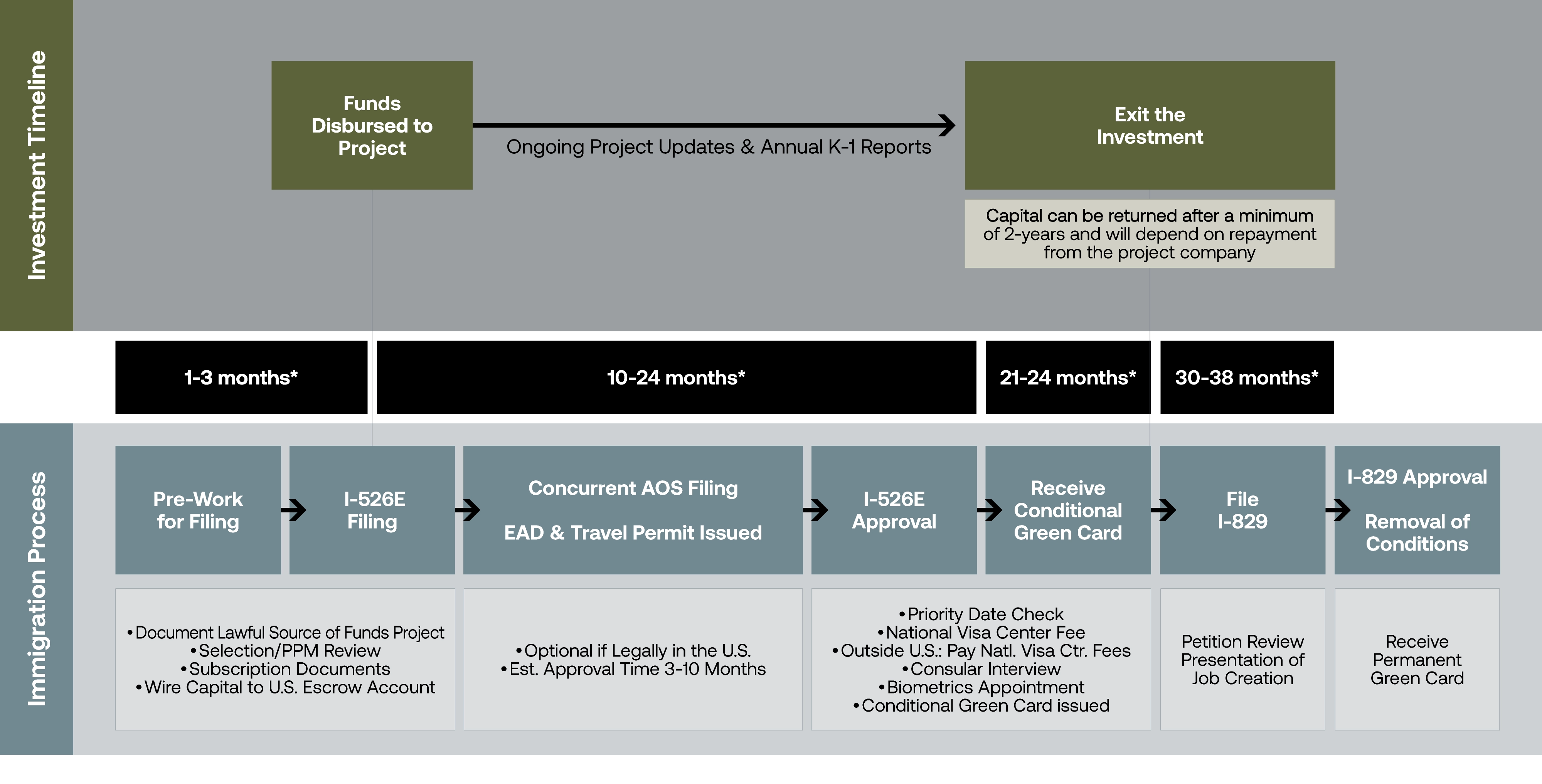
The illustration below shows the major immigration and investment milestones most investors can expect to encounter throughout the EB-5 process.
While your immigration timeline focuses on petition filings and residency milestones, your investment timeline follows project funding, job creation, and eventual capital repayment.
Individual timelines vary based on visa availability, USCIS processing times, project performance, and personal circumstances.
Understanding the Two EB-5 Timelines
- Evaluating your eligibility and selecting an EB-5 project
- Completing your investment and filing Form I-526E
- Undergoing USCIS petition review
- Pursuing Adjustment of Status or Consular Processing, if applicable
- Receiving conditional permanent residency
- Filing Form I-829 to remove conditions
- Removal of conditions and obtaining permanent residency
Estimated EB-5 Timeline by Stage
Not Sure Where You Are in the Process?
Whether you are exploring EB-5 for the first time, evaluating investment opportunities, or preparing to file, understanding your options can help you make more informed decisions.
- Where you are in the EB-5 process
- Which filing pathway may apply to your situation
- What documentation you may need
- How project selection fits into your overall goals
Concurrent Filing vs. Consular Processing
Adjustment of Status (AOS)
Adjustment of Status Process
- File Form I-485
- Potential concurrent filing eligibility
- Apply for employment authorization (EAD)
- Apply for advance travel authorization
- Remain in the United States during processing
Consular Processing
Typical Steps
- i526E Approval
- Administrative process through the National Visa Center at the U.S. Department of State
- Submit official documents
- Complete medical examination
- Attend embassy or consulate interview
- Enter the United States as a conditional permanent resident
Factors That Affect Time to Residency
Project Approval
Investor Petition
Source-of-Funds Documentation: Well-organized financial documentation may help reduce delays and Requests for Evidence (RFEs).
Requests for Evidence (RFEs): USCIS may request additional information or clarification during the review process, which can extend overall timelines.
Visa Availability
Reserved Visa Categories: Reserved visa categories established under the EB-5 Reform and Integrity Act may affect visa availability and timing considerations for some investors.
Grandfathering Protection
Future Investment Threshold Adjustments
Timeline Considerations for H-1B and F-1 Visa Holders
H-1B Professionals
Depending on visa availability and your individual circumstances, you may be eligible for concurrent filing benefits that provide additional flexibility while your petition is pending.
F-1 Students
Timing can be especially important when evaluating OPT, STEM OPT, future work authorization opportunities, and visa transitions.
The Role of Immigration Attorneys
An experienced attorney may assist with:
- Preparing immigration petitions
- Organizing source-of-funds documentation
- Coordinating USCIS filings
- Evaluating Adjustment of Status or Consular Processing options
- Responding to Requests for Evidence (RFEs)
- Advising on long-term immigration strategy

Speak With an EB-5 Specialist
Whether you are evaluating investment timing, exploring concurrent filing options, or reviewing available EB-5 opportunities, speaking with an experienced team can help you better understand your options and potential next steps.
EB-5 Frequently Asked Questions
Answers to common questions about EB-5 and working with Peachtree Group.
How long does the EB-5 process usually take?
Rather than focusing on a fixed timeframe, it is often more helpful to understand the sequence of milestones and the factors that can influence processing times.
What factors affect time to residency?
Processing timelines may vary based on three broad factors: project approval/readiness, investor petition (USCIS workload, source of funds documentation, Requests for Evidence) and visa availability.
What causes delays in the EB-5 process?
Does EB-5 timing vary by country?
What happens after conditional residency is granted?
Why is Form I-829 important?
Questions About Your Immigration Status
The following questions provide general educational information. Because eligibility for employment authorization, travel, Adjustment of Status, and other immigration benefits depends on your individual circumstances, you should consult a qualified immigration attorney for legal advice specific to your situation.